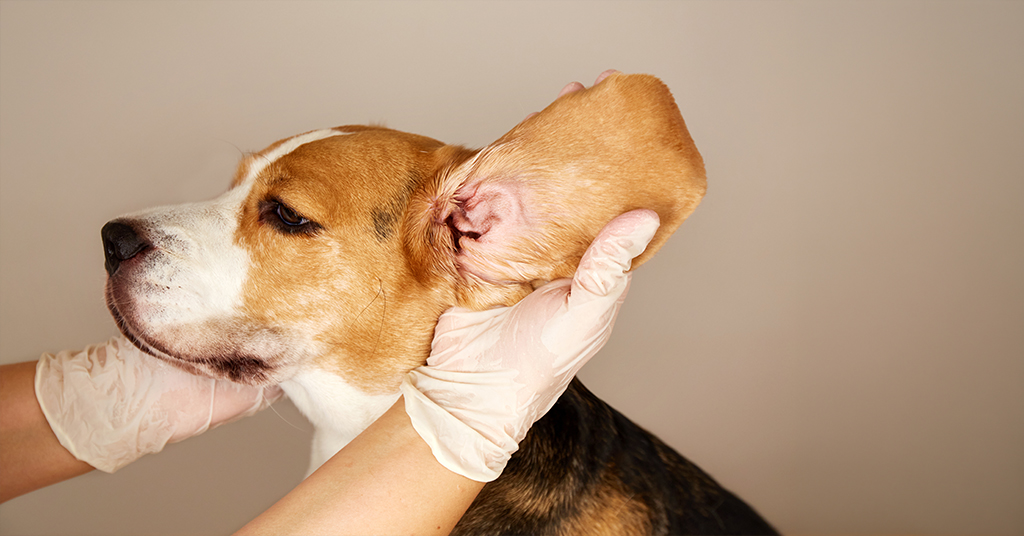
A dog ear infection is inflammation of the ear canal, usually caused by an overgrowth of bacteria or yeast, and the earliest signs include head shaking, scratching at the ear, odor, and redness inside the ear flap. Ear infections are among the most common reasons dogs visit the veterinarian, and they can be surprisingly painful. Because many dogs tolerate discomfort quietly, the problem often progresses before owners realize something is wrong.
At Taconic Veterinary Center in Cortlandt Manor, NY, our veterinarians treat ear problems in dogs of every breed and age. Catching a dog ear infection early typically means a shorter, simpler recovery, while chronic infections can lead to lasting damage. In this guide, we explain the different types of ear infections, the symptoms to watch for, what causes them, and how your veterinary team diagnoses, treats, and helps prevent them from coming back.
What Is a Dog Ear Infection?
An ear infection develops when the normal balance of microorganisms in your dog’s ear shifts, allowing bacteria, yeast, or both to multiply and inflame the tissue.
Why Dogs Are Prone to Ear Problems
Unlike the short, straight ear canal in humans, a dog’s ear canal is long and shaped like the letter L. It runs downward before turning inward toward the eardrum. That shape makes it easy for moisture, wax, and debris to collect at the bend, creating a warm, damp environment where microorganisms thrive. Dogs with floppy ears, narrow canals, or lots of hair inside the ear face an even greater risk. A healthy ear canal naturally clears away wax and debris, but inflammation from allergies or irritation disrupts that self-cleaning process and makes a dog ear infection much more likely to take hold.
Types of Ear Infections in Dogs
Veterinarians classify ear infections by the part of the ear they affect. Otitis externa involves the outer ear canal and is by far the most common type. Otitis media affects the middle ear behind the eardrum, often developing when an outer ear infection goes untreated or the eardrum ruptures. Otitis interna, an infection of the inner ear, is the least common but most serious form. Because the inner ear helps control balance, dogs with this type may show a head tilt, stumbling, unusual eye movements, or even hearing loss. Middle and inner ear infections typically require longer treatment and closer monitoring than infections of the outer canal.
Ear infections can affect one ear or both. An infection in a single ear is more likely to involve a foreign object or a localized problem, while infections in both ears often point to a body-wide issue such as allergies.
What Are the Signs of a Dog Ear Infection?
Dogs can’t tell you their ears hurt, but their behavior and the appearance of their ears often give the problem away. Making ear checks part of your regular grooming or cuddle routine helps you notice changes early, when a dog ear infection is easiest to treat.
Common Symptoms to Watch For
Keep an eye out for these signs, especially if they appear suddenly or worsen over a few days:
- Frequent head shaking or tilting the head to one side
- Scratching or pawing at one or both ears
- Rubbing the ears or face along the floor or furniture
- A yeasty, sour, or unpleasant odor coming from the ear
- Brown, yellow, or black discharge, or bloody material inside the canal
- Redness, swelling, or crusty skin on the inner ear flap
- Pain or flinching when the ears are touched, or yelping when chewing
- Changes in behavior, such as irritability, hiding, or reluctance to be petted on the head
When Symptoms Become Urgent
Some signs suggest the infection has moved deeper or caused complications. A head tilt, loss of balance, walking in circles, rapid back-and-forth eye movement, or facial drooping should prompt an immediate call to your veterinarian. Vigorous head shaking can also rupture small blood vessels in the ear flap, causing a swollen, fluid-filled pocket called an aural hematoma, which usually needs veterinary treatment. If you notice any of these changes, contact Taconic Veterinary Center at (914) 737-2437 as soon as possible.
What Causes Ear Infections in Dogs?
Bacteria and yeast are the organisms directly responsible for most infections, but something usually sets the stage by disrupting the ear’s natural defenses.
Common Underlying Triggers
Identifying the root cause is essential, especially for dogs with recurring infections. Frequent contributors include:
- Environmental allergies to pollen, dust mites, or mold, along with food allergies
- Trapped moisture from swimming, baths, or humid weather
- Ear mites, which are more common in puppies
- Foreign objects such as grass awns or plant seeds lodged in the canal
- Excess wax production or hair growth inside the ear
- Hormonal conditions like hypothyroidism
- Over-cleaning or using harsh products that irritate the canal
Breeds at Higher Risk
Allergies are the most common underlying cause of a recurring dog ear infection. Breeds with heavy, drooping ears, including Cocker Spaniels, Basset Hounds, and Labrador Retrievers, are especially susceptible. Poodles and Shih Tzus can also struggle because of hair inside the canal. Dogs with narrow ear canals, like Shar-Peis, often trap more debris and moisture as well.
Preventing Ear Infections in Dogs
Prevention focuses on controlling the triggers above. Managing allergies with your veterinarian’s help, drying the ears gently after swimming, and checking your dog’s ears weekly for redness or odor can go a long way. Ask your veterinary team whether routine ear cleaning is appropriate for your dog and which product to use, since cleaning too often or with the wrong solution can do more harm than good.
How Veterinarians Diagnose and Treat Dog Ear Infections
Effective treatment depends on knowing exactly what’s growing in the ear and how deep the infection goes.
Diagnosing the Infection
Your veterinarian will examine the ear canal and eardrum with an otoscope, which helps reveal swelling, debris, foreign objects, and whether the eardrum is intact. A sample of discharge is usually examined under the microscope through a test called ear cytology, which shows whether bacteria, yeast, or mites are present. For stubborn or recurring cases, a bacterial culture can identify the specific organism and the most effective medication. Dogs with painful ears may need sedation for a thorough exam, and advanced imaging may be recommended if a middle or inner ear infection is suspected.
Treatment Options
Most outer ear infections are treated with a professional ear cleaning at the clinic followed by prescription ear medication that targets the specific organism involved. Some dogs also need oral medications to reduce inflammation and pain, or oral antibiotics and antifungals for deeper infections. Severe chronic cases may require surgery to open or remove damaged portions of the ear canal. Never place over-the-counter or leftover medications in your dog’s ear without veterinary guidance, as some products can damage the ear if the eardrum is ruptured.
Recovery and Long-Term Management
Many dogs feel better within a few days, but it’s important to complete the full course of treatment your veterinarian prescribes. Stopping early can allow the infection to return, sometimes in a more resistant form. A recheck appointment confirms that the dog ear infection has fully cleared. Dogs with chronic ear issues often benefit from a long-term plan that addresses allergies and other underlying causes.
Comfortable, Healthy Ears Start at Taconic Veterinary Center
A dog ear infection can start with a little head shaking and quickly turn into a painful, persistent problem. Recognizing the early signs, understanding your dog’s risk factors, and partnering with your veterinarian on prevention all help your pup stay comfortable and avoid the cycle of recurring infections. Even dogs prone to ear trouble can enjoy healthier ears with the right long-term plan in place.
The experienced veterinarians at Taconic Veterinary Center proudly care for dogs in Cortlandt Manor, Peekskill, Mohegan Lake, and throughout the surrounding Westchester communities. From in-house ear cytology to allergy management and follow-up care, our team works to find answers and relieve your dog’s discomfort. If your dog has been scratching, shaking their head, or showing any of the signs described above, call us at (914) 737-2437 to schedule an exam.