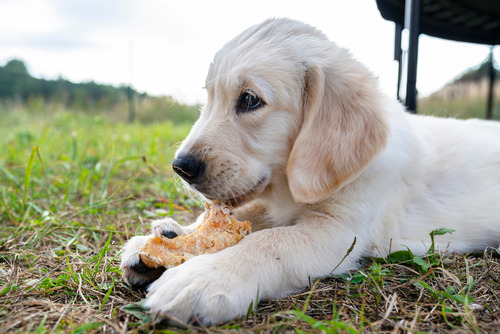
When your dog snatches a chicken bone, panic can set in fast, but you’re not alone. Many dogs manage to grab food they shouldn’t, and one of the most common (and worrisome) situations is when a dog eats a chicken bone. These bones can splinter and cause internal issues, making it important to act quickly and wisely. In this blog, we’ll explain why chicken bones are risky, what signs to watch for, and how your veterinarian can help keep your dog safe. With the right information and prompt action, you can turn a scary situation into a safe recovery for your pet.
Understanding Why Chicken Bones Are Dangerous for Dogs
While dogs love the smell and taste of chicken, chicken bones can be extremely hazardous once cooked. They tend to become brittle, breaking into sharp fragments that can cause internal injuries. Even small pieces can create serious issues if swallowed.
Cooked vs. Raw Chicken Bones
Cooked chicken bones are the most dangerous because heat weakens their structure. When chewed, these bones can splinter and puncture soft tissues. Raw bones are generally less brittle, but they still carry risks such as bacterial contamination or choking.
What Happens When a Dog Eats a Chicken Bone
If your dog ate a chicken bone, it might pass through the digestive system without causing harm, but complications can occur. Splintered bones can lodge in the throat, esophagus, stomach, or intestines. These sharp fragments can scrape or puncture internal organs, leading to pain, infection, or obstruction.
Signs to Watch for After Your Dog Eats a Chicken Bone
After realizing your dog ate a chicken bone, you’ll need to monitor them closely for any unusual symptoms. Some dogs act completely normal, while others show clear signs of distress.
Possible Symptoms Include:
- Coughing, gagging, or choking
- Drooling excessively
- Pawing at the mouth
- Vomiting or retching
- Abdominal swelling or tenderness
- Lethargy or restlessness
- Straining during bowel movements or signs of constipation
- Blood in stool or vomit
If you notice any of these signs, contact your veterinarian immediately. These symptoms can indicate a blockage or internal injury that needs prompt attention.
What Your Vet Will Do If Your Dog Ate a Chicken Bone
Veterinarians have the tools and expertise to safely assess and treat a dog that swallowed a chicken bone. Depending on your pet’s symptoms and the type of bone ingested, your vet may recommend an exam or imaging tests to determine the best course of action.
Physical Examination and Imaging
Your vet will start with a physical exam to check for pain, swelling, or discomfort. Diagnostic imaging such as X-rays or ultrasound may be used to locate the bone and assess any internal damage.
Monitoring and Treatment
In some cases, your vet might recommend monitoring your dog closely at home if the bone appears to have passed safely. However, if the bone is stuck or causing irritation, your vet may suggest further treatment, which could include removal procedures or hospitalization for observation. Your veterinarian will provide the safest, most appropriate care based on your dog’s unique situation.
What Not to Do If Your Dog Eats a Chicken Bone
When a dog eats a chicken bone, it’s natural to want to take quick action, but some common home remedies can actually make things worse.
Avoid These Mistakes
- Do not try to induce vomiting. Sharp bone fragments could cause damage on the way back up.
- Do not feed your dog large amounts of food to “pad” the stomach. This won’t protect them from injury and can lead to more complications.
- Do not wait days to see if symptoms appear. Some injuries can develop slowly and become more serious with time.
The best step is to call your veterinarian right away for guidance. The team at Taconic Veterinary Center can help you decide what to do next based on your dog’s size, the amount ingested, and any symptoms they may show.
How to Prevent Accidents When It Comes to Chicken Bones
Prevention is key when it comes to protecting your dog from dangerous situations like this. Dogs are naturally curious and often take advantage of unattended food or open trash bins.
Smart Prevention Tips
- Keep bones out of reach: Dispose of chicken bones immediately in a covered or secured trash can.
- Avoid feeding table scraps: Even small leftover bones can pose a choking or injury risk.
- Train “leave it” and “drop it” commands: These cues can prevent your dog from eating something harmful.
- Supervise meal times: Watch your dog closely when others are eating chicken or when food is left on counters or tables.
A few mindful habits can prevent your dog from getting into trouble with cooked bones and help you avoid emergencies.
What to Expect During a Visit to Taconic Veterinary Center
If your dog ate a chicken bone and needs medical attention, Taconic Veterinary Center in Cortlandt Manor offers the care and diagnostics to evaluate your pet’s condition quickly and accurately. Every dog is different, and our veterinary team will tailor care to your pet’s individual needs. You can expect compassionate communication, clear next steps, and updates throughout your dog’s visit. Taconic Veterinary Center’s experienced staff is equipped to handle emergencies and can provide the support you need in stressful moments.
Long-Term Digestive Health After Eating a Chicken Bone
Even after your dog ate a chicken bone and seems fine, their digestive system may still be sensitive for a few days. Your veterinarian might suggest a temporary adjustment to your dog’s diet or schedule a follow-up exam to ensure everything has passed safely.
Supporting Recovery
- Watch your dog’s appetite: A decreased appetite can signal lingering discomfort.
- Monitor bowel movements: Irregular stools or straining can indicate an obstruction.
- Provide a calm environment: Stress can worsen digestive upset and slow recovery.
If your dog’s behavior or digestion changes, reach out to your vet for a recheck. Early attention prevents complications and supports recovery.
When to Seek Immediate Veterinary Help
You should seek immediate help from Taconic Veterinary Center if your dog ate a chicken bone and:
- You notice vomiting, gagging, or abdominal pain
- Your dog appears lethargic or refuses to eat
- There is blood in vomit or stool
- Your dog shows signs of breathing difficulty
In these cases, call (914) 737-2437 or bring your dog to our clinic right away. Our team can provide emergency vet care at Taconic Veterinary Center and treatment to reduce the risk of serious injury.
A Safer Way Forward for Your Dog
Every pet owner wants to keep their dog safe from harm, but accidents can happen quickly. If your dog ate a chicken bone, knowing what to do and where to turn makes all the difference. The team at Taconic Veterinary Center in Cortlandt Manor, New York is here to help your dog recover comfortably and safely. Protecting your dog’s health starts with awareness and professional care. If you ever face this situation, call (914) 737-2437 or book an appointment online for expert veterinary guidance.